In the previous market cycle, discussions around DeFi focused heavily on performance metrics such as TPS and contract complexity. However, in real-world operation, growing issues have emerged around whether systems can remain stable over long periods of time. At present, most DeFi systems are still built on the assumption of “one-time execution,” where strategies exist in short, discrete forms, and protocols lack the ability for continuous operation and dynamic adjustment after deployment.
Even with the introduction of AI, it is mostly applied as an external decision-making tool. Computing power is outsourced, execution paths lack unified management, and operational risks gradually accumulate within the system. As market structures and trading complexity increase, AI and agents have effectively entered DeFi’s execution pathways, participating in market making, risk control, capital routing, liquidation triggers, and parameter adjustments. Yet current architectures are not designed around long-term intelligent agents. Continuous inference, continuous execution, and state evolution lack runtime-level support. Under such conditions, systems can execute trades and initiate strategies, but struggle to maintain long-term stability in complex environments. As intelligent agents become persistent participants in financial systems, DeFi’s underlying structure is evolving toward an AI-native form, and the importance of runtime infrastructure is becoming increasingly evident.
Against this backdrop, GamePad has emerged and continues to advance. Focusing on DeFi’s operational phase, GamePad builds infrastructure around the new demands created by long-term on-chain participation of AI and agents. It integrates compute scheduling, agent runtime, and execution management into a unified framework, enabling automated strategies and intelligent execution to operate stably after launch and continue functioning in complex market environments. By systematizing execution capabilities, GamePad provides an engineering structure capable of supporting long-term DeFi operation, establishing its position as foundational infrastructure in the next generation of intelligent DeFi systems.
System Design for Long-Term Execution: GamePad’s Infrastructure Path
Addressing the structural problems revealed during DeFi’s operational phase, GamePad treats “execution” as a fundamental capability that must be systemically supported. In this design, execution is no longer the result of isolated calls, but a core operational element throughout the system lifecycle. From the architectural level, GamePad adopts an AI-native approach, assuming the long-term existence, continuous inference, and state evolution of intelligent agents, ensuring that the system is designed from the outset to support sustained intelligent execution.
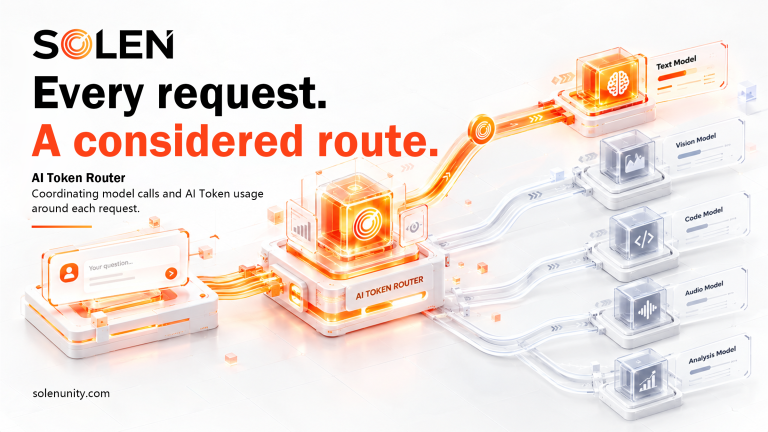
Within the GamePad system, computing power is managed as a schedulable system resource. Through a unified compute scheduling mechanism, different inference and execution tasks are allocated resources that match their runtime requirements, balancing cost, stability, and predictability for continuous computation and high-frequency execution. Computing power is no longer treated as an external expense, but as an integrated part of system operation, continuously allocated and managed.
On this basis, GamePad establishes a persistent runtime mechanism for agents, allowing strategies and agents to exist in a hosted form over long periods. Agents maintain session states, execution context, and decision continuity during operation, and execution behavior is incorporated into a unified management and feedback framework. This reduces instability caused by execution jitter and state discontinuity, allowing system performance to gradually stabilize through continuous observation and constraint.
By systematizing execution capabilities, GamePad provides DeFi with an engineering structure capable of sustaining long-term intelligent execution. In this model, execution stability becomes a key indicator of system maturity and is emerging as a core competitive factor for next-generation DeFi infrastructure.
As execution becomes systemized, operational security must also be addressed at the infrastructure level. For long-term operation scenarios, GamePad introduces a machine-gun pool mechanism under third-party supervision for liquidity and fund management, supporting stable operation under continuous execution and high-frequency scheduling. This structure integrates capital management, risk constraints, and operational guarantees into a unified framework, making liquidity not only a trading function but also a core component of system operation.
Through explicit rule constraints and external supervision, this mechanism provides controlled support for compute consumption, strategy execution, and system load during long-term operation. Security is elevated from parameter configuration to structural design. In this system, operational risks are identified early and incorporated into management pathways, helping the system maintain continuity and predictability in complex market environments.
GamePad Set for Full Launch
As its infrastructure capabilities take shape, GamePad is also advancing preparations for public deployment. The project has secured lead investment and strategic support from top institutions including OKX and Enjin, providing important external validation for entering real-world operation. With institutional participation, GamePad has systematically deployed trading channels: spot trading will debut on Bybit, Bitget, and Gate, while derivatives will be launched on OKX and Binance, covering both spot and derivatives markets and providing clear support for early-stage price discovery and liquidity formation.
As trading structures become clearer, GamePad has further planned its early participation framework and network launch rhythm. A whitelist program covering 36 countries and regions has been launched, with a clearly defined scale of approximately 2,000 overseas slots and 1,000 mainland slots, mainly advanced during the pre-launch phase. In parallel, the project has allocated USD 50 million in market-making funds and established a large-scale machine-gun pool mechanism to support liquidity stability and execution assurance during operation.
With these conditions in place, GamePad has entered a critical pre-launch window. Core systems and supporting mechanisms are about to enter real operation, after which performance will be continuously validated and evolved through real usage and ecosystem expansion.
Conclusion
As core infrastructure takes shape and market deployment conditions are gradually met, GamePad is now ready to enter its operational phase and demonstrates potential for further expansion. For the market, this represents a more mature form of DeFi operation becoming reality.
As the system goes live and the ecosystem expands, GamePad’s value will increasingly be reflected in real-world operational performance and long-term evolution capability. As DeFi continues to move toward intelligence and systemization, infrastructure capable of long-term operation remains in its early stages, with significant future potential yet to be unlocked and to secure a place within the next generation of DeFi infrastructure.
About the Author