In 2026, the global financial system is under unprecedented pressure as two worlds collide.
Web2, or traditional finance, has trillions in assets, strict regulatory frameworks and mature risk-pricing models. Yet inefficiencies and asset silos persist. Web3, the world of digital assets, offers exceptional liquidity, efficient round-the-clock clearing and limitless possibilities for tokenization. Yet opaque practices, distrust and sharp price swings have long plagued these markets.
A gulf separates these parallel worlds. Whoever can unite Web2’s rigor with Web3’s liquidity through technology holds the key to wealth creation over the next decade.
Spark Union Capital Inc., the global AI-driven fintech company behind SPARK ONE, offers its own answer. It puts rigorous engineering, cross-market coordination and transparent compliance ahead of promises of overnight riches. Its ambition is to bridge the divide and lead the development of the next generation of global asset management infrastructure.
I. Breaking Down Asset Silos Between Web2 and Web3 Through Multi-Market Coordination
Asset silos are the greatest structural weakness in traditional asset management. In Web2, separate teams manage gold, foreign exchange and equities on separate systems, making it inefficient to move capital between them. Digital assets, meanwhile, often sit outside mainstream risk controls, treated as a high-stakes casino unto themselves.
As tokenization spreads, asset types are converging. Firms such as BlackRock and JPMorgan are investing in on-chain settlement, blurring traditional boundaries. Asset managers face a critical question. How can one system measure risk and manage liquidity across a portfolio of physical gold, foreign exchange contracts and on-chain tokenized claims?
Spark One’s answer is Multi-Market Coordination, a capability built into its AI quantitative system that bridges Web2 and Web3.
Beyond executing individual strategies, AI coordinates allocations across five asset classes: gold, foreign exchange, global equities, indices and digital assets. It uses its computing power to track cross-asset correlation thresholds and liquidity characteristics in real time.
When volatility spikes or liquidity dries up in one market, the system can quickly shift exposure across Web2 and Web3 in search of the best risk-adjusted return. Spark One treats digital assets as an integral, adjustable exposure within its multi-asset strategies. Common position limits and liquidity haircut parameters apply across asset classes, whatever form the underlying assets take. This is how the platform breaks down silos.
II. Closing the Risk Management Gap: The Discipline of Selecting Eight Strategies from 120
Traditional managers use regression on historical data to anticipate future outcomes. Web3 participants often place unquestioning faith in the rationality of smart contracts. Their approaches to risk diverge sharply. Many quantitative platforms claiming to span both markets operate as black boxes. Investors see returns but cannot see the exposure the system carries under extreme conditions.
The best institutions respect the market. Spark One’s published figures show the engineer’s restraint it takes to bridge that gap.
The platform has 62 financial and market data sources, 1,500 research models and 8,600 historical backtest records. In Spark One’s lab, AI’s job is to filter strategies ruthlessly, without pretending it can predict everything. Of 120 initial strategy concepts put through historical backtesting, out-of-sample validation, simulated trading and stress testing, just eight, or about 6.7%, reach live trading.
A 93.3% rejection rate means flawed or fragile strategies are eliminated early. Spark One is applying engineering principles to asset management on the conviction that managing assets is fundamentally a matter of defense.
Spark One deploys 126 automated risk controls and 24 AI agents. The agents keep one another in check and verify decisions before execution so the system remains rational even at market extremes. Spark One credits this screening and strict risk control with keeping its historical maximum drawdown within 13% in highly volatile markets. That capacity to grow stronger under stress gives Spark One ballast where Web2 and Web3 meet.
III. Bridging the Trust Gap: Compliance as the Only Route to Institutional Capital
Web3 once took pride in operating beyond regulatory oversight. Successive crises of trust in crypto-native markets have brought unprecedented regulatory demands on fintech platforms worldwide. Compliance offers the only route for institutional capital to enter.
Facing tighter, fragmented regulation, Spark One has embraced traditional finance’s regulatory framework.
It has registered as a money services business (MSB) with the U.S. Financial Crimes Enforcement Network (FinCEN), completed its corporate registration in Colorado and established rigorous know-your-customer (KYC) procedures and transaction monitoring to identify unusual activity. For digital asset strategies, it emphasizes operating within a compliant framework with clear custody and audit arrangements.
“We like being licensed. We like being regulated. Because it builds trust in the market,” Spark Union honorary advisor Justin Foster has said. Spark One sees compliance as its passport to the trust of long-term investors.
These transparent, regulated operations are laying the groundwork for tens of billions in institutional capital. Only a system built on compliance can bridge the trust gap that keeps traditional capital from digital assets.
IV. Crossing Ecosystem Boundaries: From a Single Tool to Global Asset Management Infrastructure
As AI reshapes finance, competition has moved beyond individual tools to the strength of entire ecosystems.
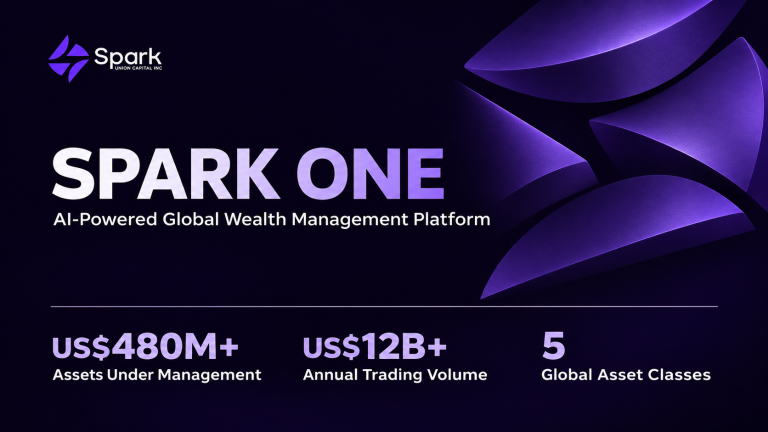
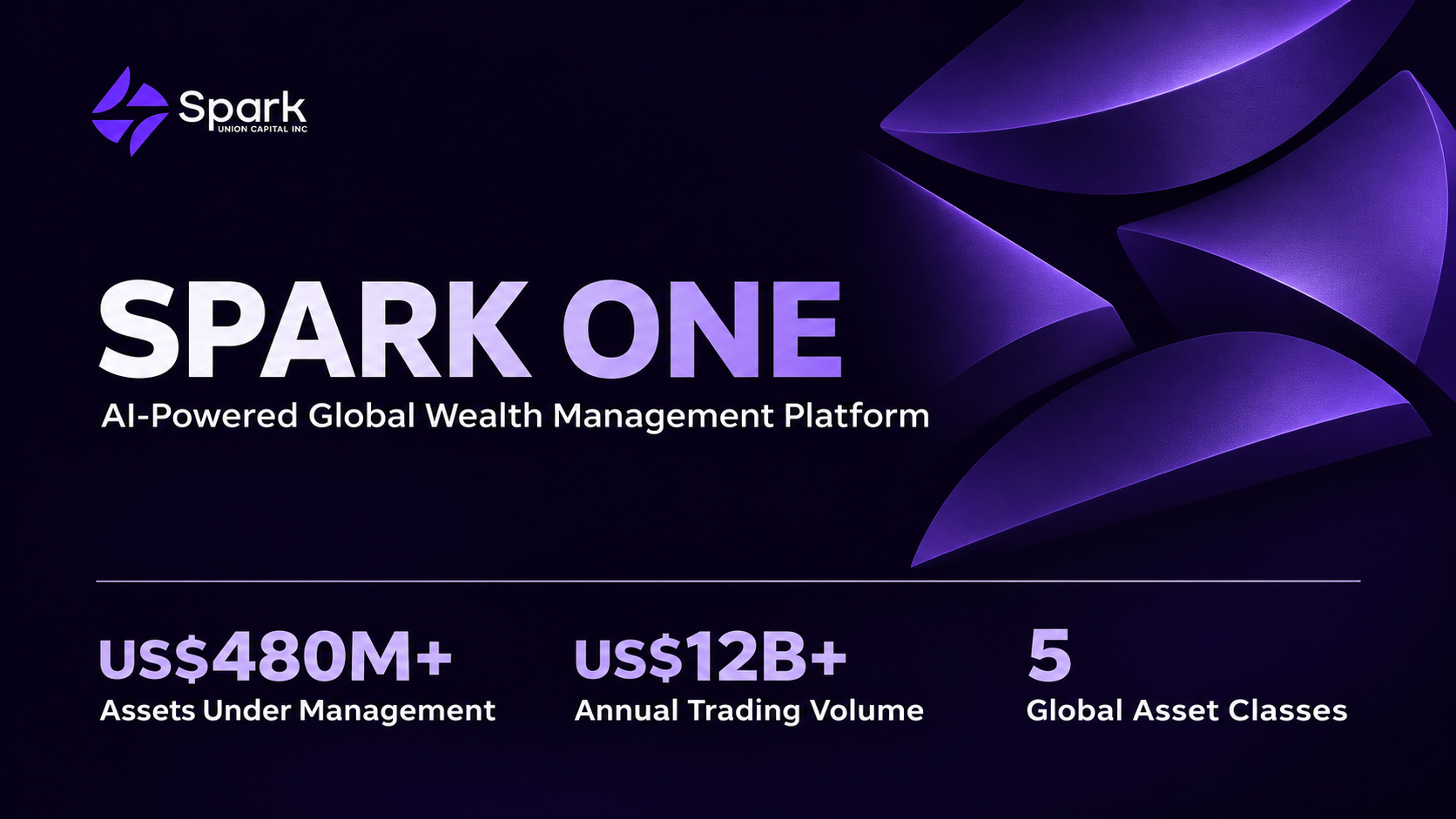
Spark One now manages more than $480 million in assets, with annual trading volume above $12 billion. These figures demonstrate Spark One’s commercial strength and mark its transition from a standalone AI-driven quantitative trading tool to underlying financial infrastructure.
That trajectory was deliberate. While peers focused on individual factors, Spark One concentrated on coordinating allocations across markets. It screened 120 strategies down to eight to isolate alpha in an industry drawn to black boxes. Where others tested regulatory boundaries, it pursued licensing and adopted KYC to build lasting trust.
Spark One aims to enter new markets and introduce innovative products so that institutions and individual investors alike can benefit from AI within a secure, regulated framework.
As AI evolves from a tool for generating returns into a rigorously engineered financial engine, Spark One is closing gaps in asset allocation, risk management and trust between Web2 and Web3. Under its leadership, a more transparent, resilient era of wealth management with global reach is drawing closer.
About Spark Union Capital Inc.
Founded in 2020 and headquartered in Denver, Colorado, Spark Union Capital Inc. is a global AI-driven fintech platform. Its SPARK ONE platform offers multi-asset strategies spanning gold, foreign exchange, global equities, indices and digital assets. The company has completed U.S. FinCEN MSB registration and Colorado corporate registration. Through systematic risk controls, transparent monitoring and compliant operations, it aims to build a future-ready system for intelligent wealth management.
Website: https://www.sparkunioncapital.net
X (Twitter):https://x.com/sparkaig
About the Author